Slope Protection and Ecological Restoration Solution
1.Industry Pain Points & Challenges
In highway slope, mountain restoration, and riverbank protection projects, the most challenging issues include:
(1) Severe soil erosion: Rainwater erosion leads to gully formation on slopes, even triggering landslide risks.
(2) Difficulty in plant growth: Steep or rocky slopes cannot retain water and nutrients, making it difficult for vegetation to survive, resulting in a “white mountain stubble” phenomenon.
(3) High cost and unsightly nature of traditional reinforced concrete: Concrete spraying and anchoring are extremely expensive and damage the natural landscape, failing to meet modern ecological and environmental protection requirements.
2.Our System Solution
Changfeng’s “Three-Dimensional Soil Stabilization + Vegetation Greening” solution includes:
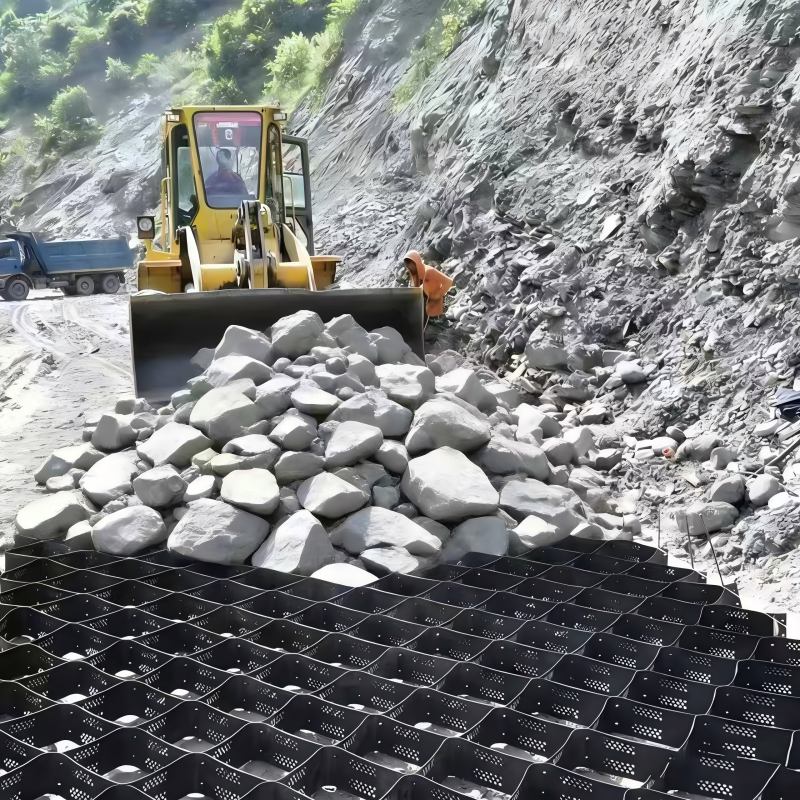
(1) Slope honeycomb constraint system: Using geocells. These are unfolded on the slope and filled with soil, rock, or vegetation soil, with the honeycomb-like three-dimensional structure firmly locking the filler.
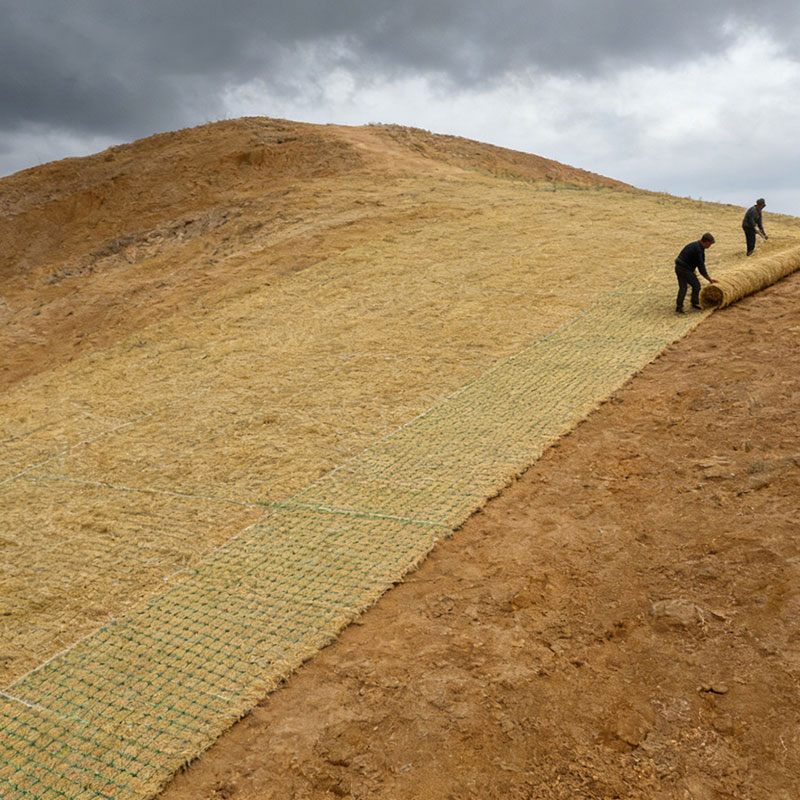
(2) Surface erosion control: Laying coconut fiber mats or geomats slows runoff velocity through their fiber structure, protecting seeds from being washed away.
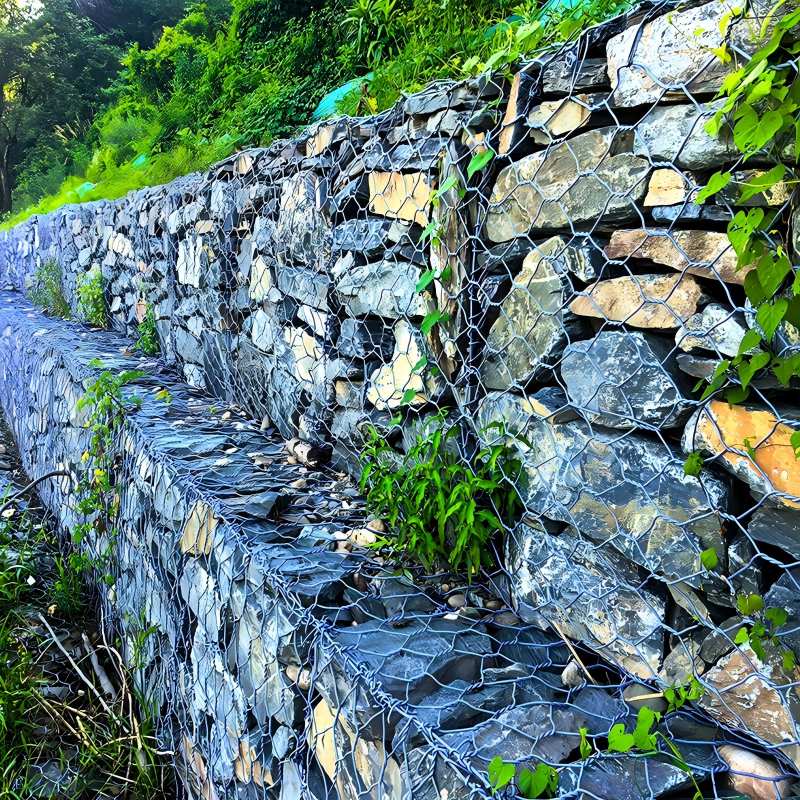
(3) Ecological bank protection: Using gabions combined with geotextiles satisfies both structural strength requirements and allows for water and air exchange.
3.Core Advantages
(1) Supports greening of steep slopes (45°+): The mechanical anchoring force of geocells makes greening of steep slopes possible, effectively preventing overall landslides.
(2) Surface runoff reduction of 80%: The erosion control mat absorbs the impact of rainwater, significantly reducing the initial runoff’s cutting effect on the slope.
(3) Rapid revegetation in 4-8 weeks: Providing a stable micro-ecological space for plant roots, achieving greening within the same year of construction.
4.Case Studies & Related Products
Typical case: The slope protection project of the Abidjan Highway extension in Côte d’Ivoire successfully achieved the dual goals of “engineering safety and ecological landscape”.