What Is a Gabion Types and Applications
-

- 23rd octubre 2026
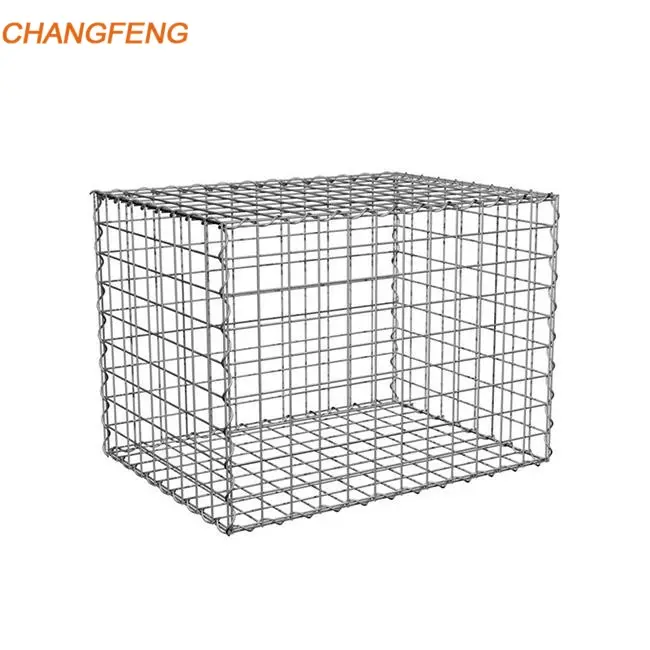
A gabion is a wire mesh container filled with stone on site. Connected units form structures that hold soil, protect banks from erosion, or line channels. The gaps between the stones allow water to pass through, while the weight of the fill gives the structure stability. Gabions come in several shapes and mesh constructions, so the choice begins with the work the structure needs to do.
For a retaining wall, the designer will consider height, foundation conditions, drainage, and the soil behind the wall. For a riverbank, water flow and possible scour become central. Those conditions determine the basket form, wire protection, stone fill, and installation details.
How Does a Gabion Work?
The mesh holds individual stones together as a unit. After a basket is opened and assembled, workers position it, fill it with appropriately sized stone, close the lid, and connect it to neighboring units. A series of filled baskets can form a gravity retaining wall or a protective layer along a watercourse.
The stone-filled structure is permeable, which can help water drain through it. A retaining wall still needs a designed foundation, backfill, and drainage arrangement. On a riverbank, the design also needs to account for erosion at the base and ends of the protected section. Gabions can accommodate some ground movement, but their performance depends on the mesh, stone, connections, and site preparation.
Main Types of Gabions
Gabions are commonly described by their shape and by how the wire mesh is made. These two descriptions overlap: a box can use double-twisted hexagonal mesh or welded panels.
Gabion Baskets and Boxes
Rectangular, stone-filled baskets are used to build retaining walls, support embankment toes, and protect banks. They are stacked or placed side by side according to the engineered layout. Internal divisions may be specified to help retain the basket shape and distribute fill.
A double-twisted hexagonal mesh basket has wire woven into a flexible net. That flexibility can be useful where the supporting ground may settle slightly. A welded gabion box uses rigid mesh panels joined at the edges. Its straighter faces can suit visible walls and garden construction where a regular finish matters. The designer should select the construction based on structural duty, ground movement, appearance, and connection details. CHANGFENG offers both hexagonal mesh and welded gabion boxes.
Gabion Mattresses
A gabion mattress is a broad, shallow stone-filled unit. It spreads protection across a riverbank, channel bed, or slope surface. The thin profile suits broad areas that need surface erosion protection.
Flow velocity, potential bed scour, slope, and stone size determine the mattress design. Edge and toe details are particularly important because water can undermine a poorly terminated protective layer. Mattress dimensions and availability should be confirmed against the supplier’s actual product range.
Sack and Decorative Gabions
Sack gabions are flexible, often cylindrical units used in selected hydraulic or repair works where a conventional box is difficult to place. They are a distinct product form and require a project-specific placement method.
Decorative gabions use stone-filled mesh as a visible wall, screen, or garden feature. Appearance changes the selection: stone color and size, panel alignment, exposed edges, and the finish of the wire all matter. Even a low garden wall needs appropriate support and a stable base. Confirm these specialized formats with the supplier before adding them to a purchase specification.
Where Are Gabions Used?
The same basket principle serves different civil works, but each application places a different demand on the structure.
| Solicitud | What the gabion does | Design conditions to check |
| Retaining wall | Holds back soil through the weight of connected baskets | Wall height, bearing ground, backfill, drainage, and stability |
| Riverbank protection | Shields exposed banks from moving water | Flow, scour at the toe, bends, and upstream and downstream ends |
| Embankment toe | Supports and protects the base of an embankment | Foundation, runoff, settlement, and connection to adjacent protection |
| Channel lining | Protects a bed or bank from erosion | Flow direction, edge anchorage, filter layer, and stone movement |
| Garden wall | Creates a visible boundary or feature | Base, public access, stone finish, and exposed wire edges |
A retaining wall is one of the most familiar uses. The baskets form a gravity structure whose dimensions must be checked for sliding, overturning, and foundation bearing under the site loads. The residential gabion retaining wall project shows a slope support application. Its site conditions and reported outcomes are specific to that project.
Along rivers and channels, gabions protect soil from flowing water. A box or mattress can follow an irregular bank, while the finished layout must address scour beneath the lowest units. The engineer may specify a filter layer behind or below the stone-filled mesh to keep fine soil from washing out.
How to Choose a Gabion for Your Project
Start with a drawing and the function of each section. A wall, a channel bed, and a decorative screen need different calculations and details even if they use similar-looking wire baskets.
Select Mesh, Wire, and Coating
Specify whether the project needs double-twisted hexagonal mesh or welded panels. Then set the basket dimensions, mesh opening, wire diameter, edge wire, and connection method. The selected wire and coating must suit the expected loads, exposure, and design requirements.
Galvanized steel wire and PVC-coated wire are available for gabion orders. Exposure to water, soil, weather, and possible abrasion should guide the coating choice. Ask for the wire and coating specification on the quotation, along with any tests required by the contract. A coating description alone does not establish a service life for every site.
Match Stone to the Mesh
The fill stone must be large enough to remain inside the specified mesh openings. It also needs to meet the project’s requirements for durability and placement. Very small stones can escape through the mesh; oversized pieces can be difficult to pack evenly and may distort the basket.
Confirm whether suitable stone will be sourced locally. That decision affects freight cost, handling, and the installation sequence. The mesh supplier should receive the proposed stone grading so the opening size can be checked before production.
Check the Ground and Water
For a wall, provide the height, cross-section, soil conditions, groundwater information, and loads near the crest. The designer can then define the foundation width, basket arrangement, backfill, and drainage. Gabion permeability can assist drainage, yet fine soil behind a wall may still need a filter layer.
For hydraulic work, provide expected water levels, flow conditions, and locations prone to scour. Show how the protection starts and ends, including its toe. Stone movement or undermining at an exposed edge can compromise a wider section, even when the baskets themselves remain intact.

What to Include in a Gabion RFQ
Send the supplier the application, drawings, required basket size, quantity, mesh construction, opening size, wire diameter, coating, and stone grading. Add the site location, exposure conditions, required tests, packing method, destination port, and delivery schedule.
If the design is still being developed, identify the dimensions and properties awaiting engineering approval. Ask the supplier to state the proposed unit configuration, connection accessories, folded bundle dimensions, labels, and shipment quantity. This gives the buyer a clearer basis for comparing quotations and planning installation.
Trabajando con CHANGFENG
CHANGFENG supplies gabion mesh and baskets for retaining, riverbank, embankment, slope, and garden projects. Available options include hexagonal wire netting, welded boxes, galvanized wire, and PVC-coated wire. Box size, mesh opening, wire diameter, coating, and packing can be specified for a project order. Gabion boxes can be folded, bundled, strapped, and palletized for delivery.
For a project quotation, send the gabion drawings and specifications with the required quantity, stone fill plan, destination, and schedule. Confirm samples and any contract tests before production.
Preguntas frecuentes
Q1: What is the difference between a gabion basket and a gabion mattress?
A: A basket is a deeper box commonly used in walls or embankment protection. A mattress is a shallow unit spread over a channel bed, bank, or slope for surface erosion protection. The project design determines the dimensions and placement.
Q2: Should I choose hexagonal mesh or a welded gabion box?
A: Hexagonal double-twisted mesh offers a flexible netting structure. Welded panels hold straighter faces. Compare ground movement, structural duty, appearance, and the specified connections before choosing.
Q3: Does a gabion retaining wall need drainage?
A: Water can pass through the stone-filled baskets, but the wall still needs an engineered backfill and drainage arrangement. A filter layer may be required to keep fine soil from washing into the stone voids.
Q4: What stone should be used to fill a gabion?
A: Use durable stone of a size that stays inside the specified mesh opening and meets the project’s grading requirements. Confirm the local stone source and grading with the designer and mesh supplier.
Q5: What details are needed for a gabion quotation?
A: Provide the drawings, application, box dimensions, mesh type and opening, wire diameter, coating, quantity, packing requirements, destination, and schedule. Include stone grading and any required test standards.

Mejorar el rendimiento de la energía solar.
Últimos proyectos, soluciones y suministros energéticos
Geomembrana de HDPE texturizada
Geomembrana lisa de HDPE
Revestimiento de geomembrana compuesta
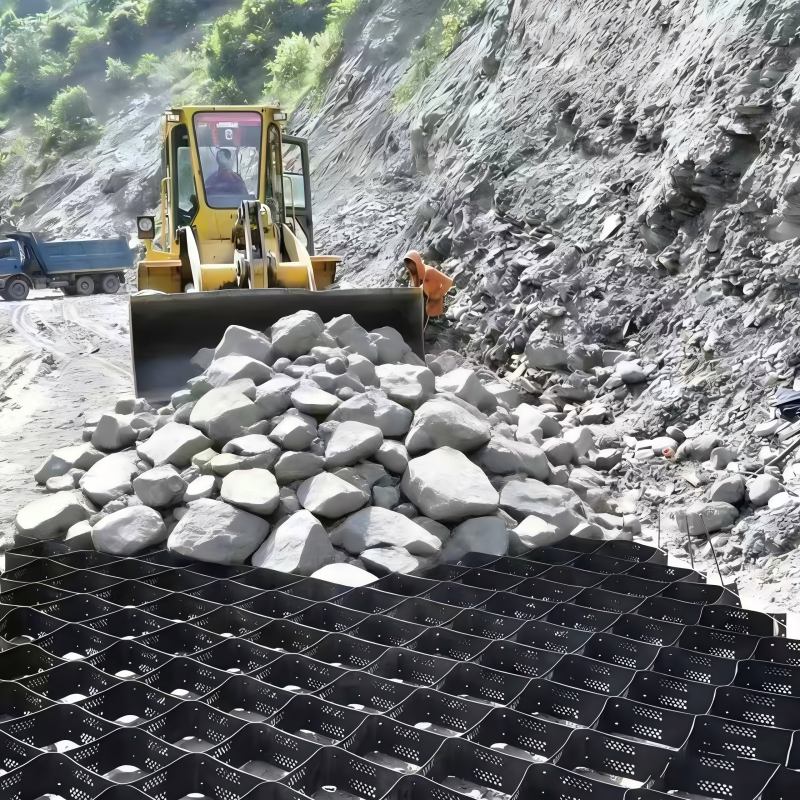
Protección de canales
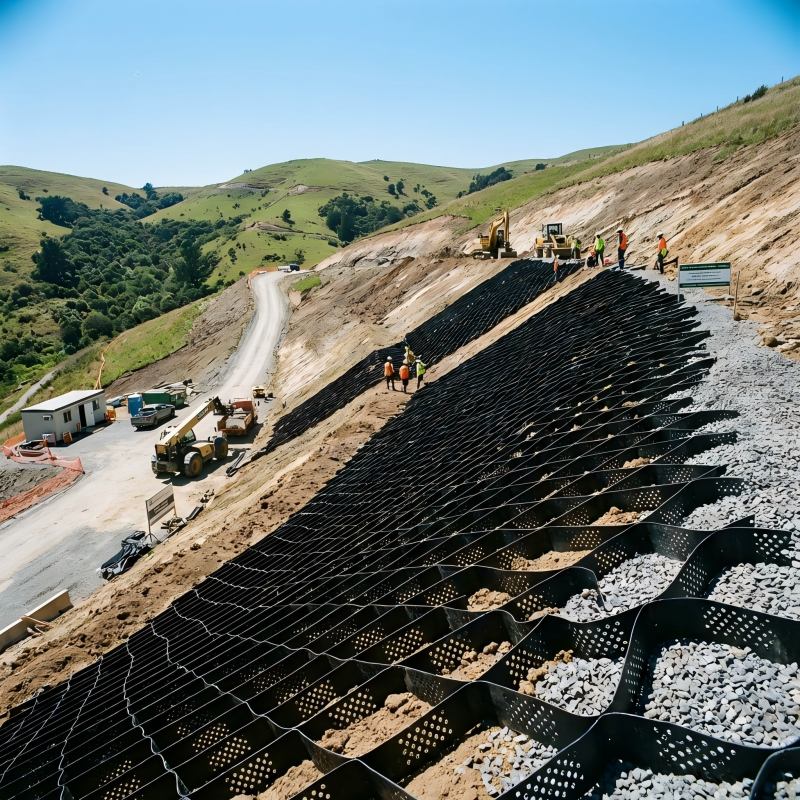
Control de la erosión en taludes
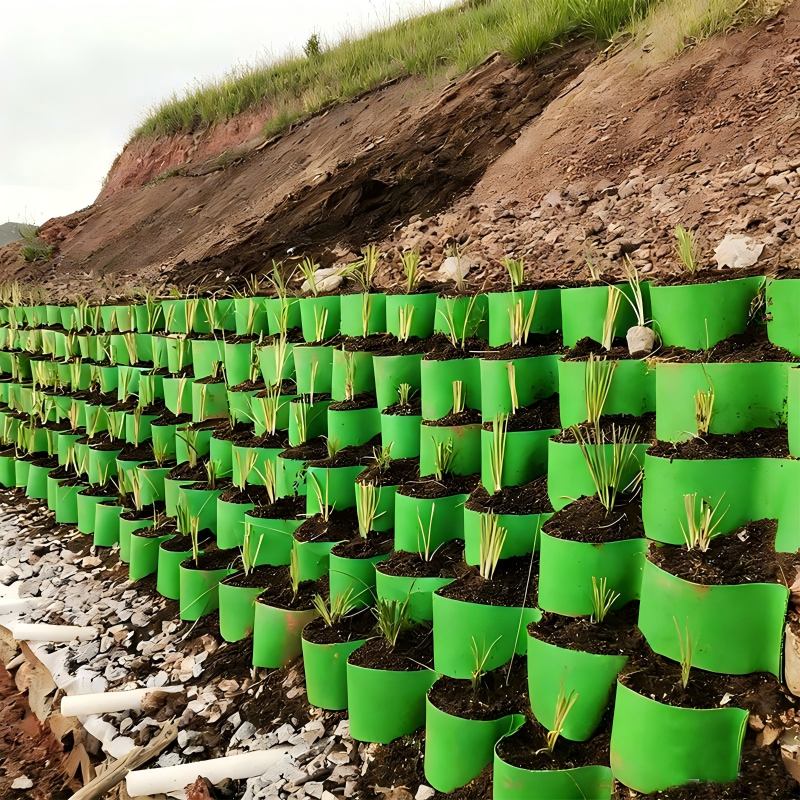
Muros de contención

Más que un fabricante
Su socio de soluciones
Cerramos la brecha entre la eficiencia de la producción directa de fábrica y la experiencia en ingeniería. Ya sea que deba lidiar con regulaciones estrictas o condiciones complejas en el sitio, nuestro equipo le brinda la "Resistencia Oculta" que su proyecto requiere mediante una profunda colaboración técnica.

Colaboración de expertos

Autoridad de Fábricas

Soluciones innovadoras
Obtén un presupuesto