What Is a Geomembrane? Types, Materials, Uses and How It Works
-

- 21st August 2026
A geomembrane is a low-permeability synthetic liner used to control the movement of liquids or gases in an engineered system. It forms the barrier layer in projects such as landfills, reservoirs, canals, mining facilities, wastewater ponds and aquaculture ponds. Material, surface texture, supporting layers and field seams all affect how that barrier performs.
For project selection, focus on the polymer, surface, liner structure and site conditions. These choices connect the liner to the contained medium, slope, subgrade and installation plan.
What Is a Geomembrane?
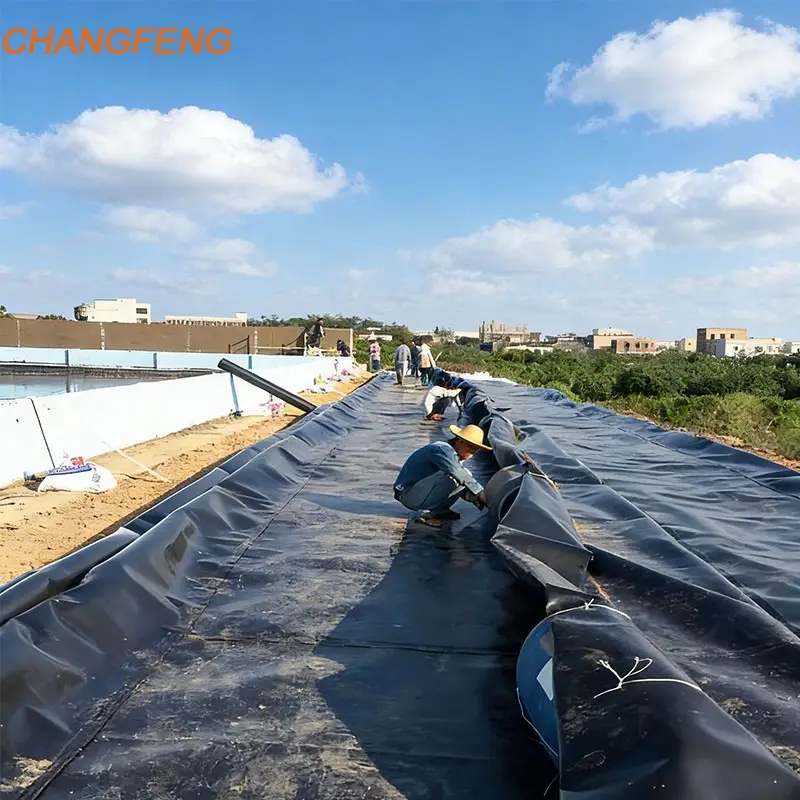
Geomembranes are supplied as sheets or rolls. Installers place panels over a prepared surface and join them into a continuous containment layer. The system may also include geotextiles, drainage products, protective soil and anchoring details.
Geomembrane vs. Geotextile
A geomembrane controls fluid or gas migration. A geotextile is a permeable textile used for filtration, separation, drainage, reinforcement or protection. The two products often work together: a geotextile can protect a geomembrane from local stress while the geomembrane provides containment.
Geomembrane vs. Other Liner Components
Clay layers, drainage geocomposites and protective geotextiles perform separate functions. A designer assigns each layer a role and checks the interfaces under load, settlement and hydraulic conditions.
How Does a Geomembrane Work?
A geomembrane works by creating a low-permeability path between the contained material and the surrounding ground or structure. System performance depends on continuity across panels, connections and penetrations.
Barrier Continuity and Low Permeability
The polymer sheet provides the primary barrier. Its material and thickness must suit the contained medium, temperature and exposure. Surface damage, unsupported voids and excessive strain can interrupt continuity.
Seams, Penetrations and Terminations
Field seams connect panels. Pipes, corners, sumps and anchor trenches require details that preserve continuity. The quality plan should define joining methods, inspection points and acceptance tests.
Subgrade, Protection and Drainage Layers
The subgrade should meet the specified grading, compaction and surface condition. A geotextile can protect the liner from concentrated stress, while drainage layers collect liquid or gas for controlled removal.
What Materials Are Geomembranes Made From?
Polymer choice influences flexibility, chemical compatibility, thermal response and field joining. The specification should state test methods and acceptance values.
HDPE
High-density polyethylene, or HDPE, is supplied in smooth and textured forms for landfill, mining, water and industrial applications. Selection should address chemical compatibility, stress, temperature and installation geometry.
LLDPE and LDPE
Linear low-density polyethylene and low-density polyethylene have different mechanical behaviour from HDPE. Review product data at the same thickness, test method and service conditions.
PVC, EPDM and Other Materials
PVC, EPDM and other polymers also appear in specifications. Panel fabrication, joining and exposure limits vary, so selection requires complete technical data.
What Are the Main Types of Geomembrane?
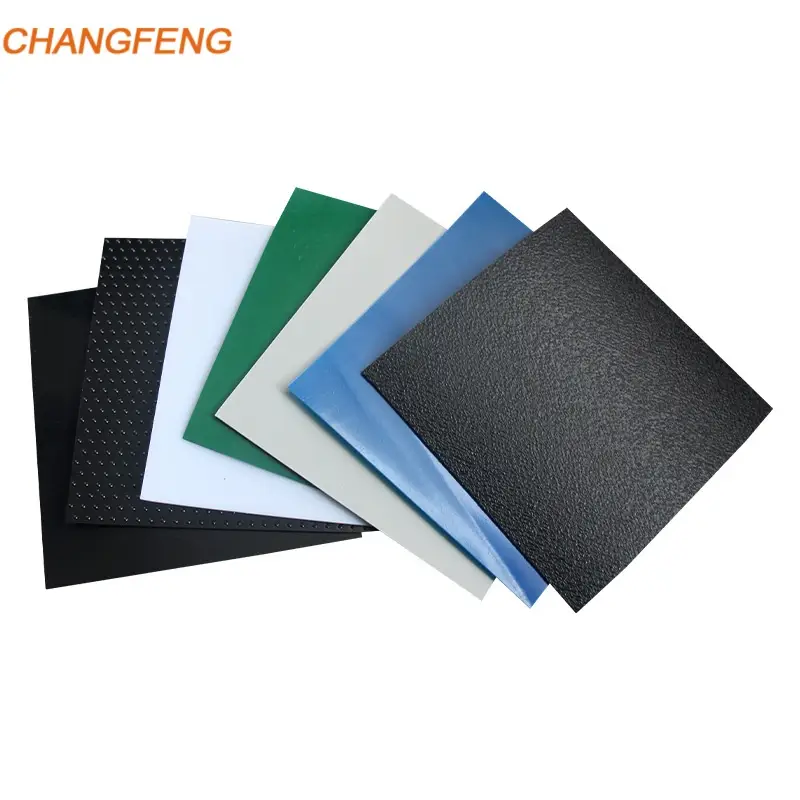
Geomembranes can be classified by polymer, surface and construction. For practical project screening, surface and construction often provide the quickest link to site conditions.
| Typ | Construction | Design Purpose | Example Applications |
| Smooth geomembrane | Flat polymer sheet | Continuous containment on compatible subgrades and geometries | Reservoirs, wastewater ponds, landfill cells and process ponds |
| Textured geomembrane | Texture on one or both faces | Interface friction for slopes and layered systems | Landfill slopes, mine facilities, dam facings and canals |
| Composite geomembrane | Polymer film bonded to one or two geotextile layers | Barrier plus protection, separation or added mechanical support | Water works, waste containment, roads and remediation |
Smooth Geomembrane
A smooth liner has a flat surface. CHANGFENG lists HDPE, LDPE and LLDPE options for water, waste, environmental and mining projects. Its smooth range lists 0.75-2.0 mm thickness, standard widths of 6-8 m, widths up to 9 m, and roll lengths of 50-100 m. Confirm final dimensions in the order specification.
Textured Geomembrane
A textured liner adds friction to one or both sides where slope angle and interface shear behaviour influence stability. CHANGFENG lists single-sided and double-sided HDPE options for landfill slopes, mining areas, canals, dams and infrastructure.
Verbund-Geomembran-Auskleidung
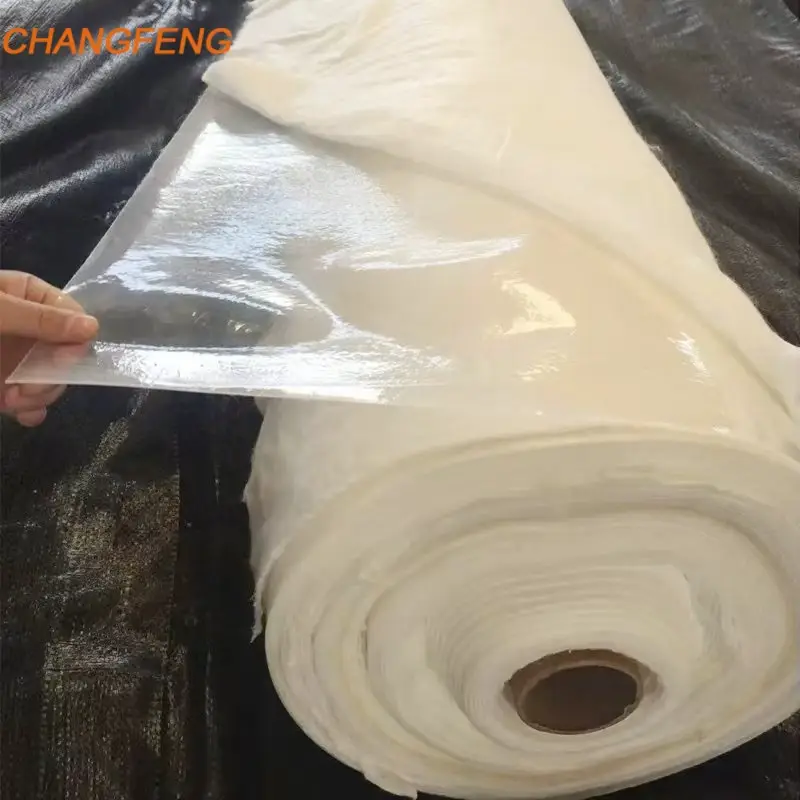
A composite liner bonds an HDPE or LDPE film to one or two geotextile layers. CHANGFENG lists one-cloth/one-film and two-cloth/one-film structures, 400-1,500 g/m2 total weights and 0.2-1.0 mm film options. The textile protects and separates around the barrier film.
Where Are Geomembranes Used?
Each application needs a defined barrier between the contained medium and its surroundings.
Landfills and Waste Containment
Geomembranes serve as base liners, pond liners or cover-system components. The design must address leachate, slopes, drainage, penetrations and the materials placed above and below the liner.
Mining and Industrial Containment
Mine process areas, tailings facilities, evaporation ponds and industrial ponds can require liners selected for the contained chemistry and mechanical loading. CHANGFENG’s mining and industrial containment solutions provide a relevant route for application-level review.
Reservoirs, Canals and Water Storage
Geomembranes control seepage in reservoirs, canals, dams and irrigation storage. Geometry, water level changes, anchorage and protection layers should be defined before the roll plan is prepared.
Wastewater and Aquaculture Ponds
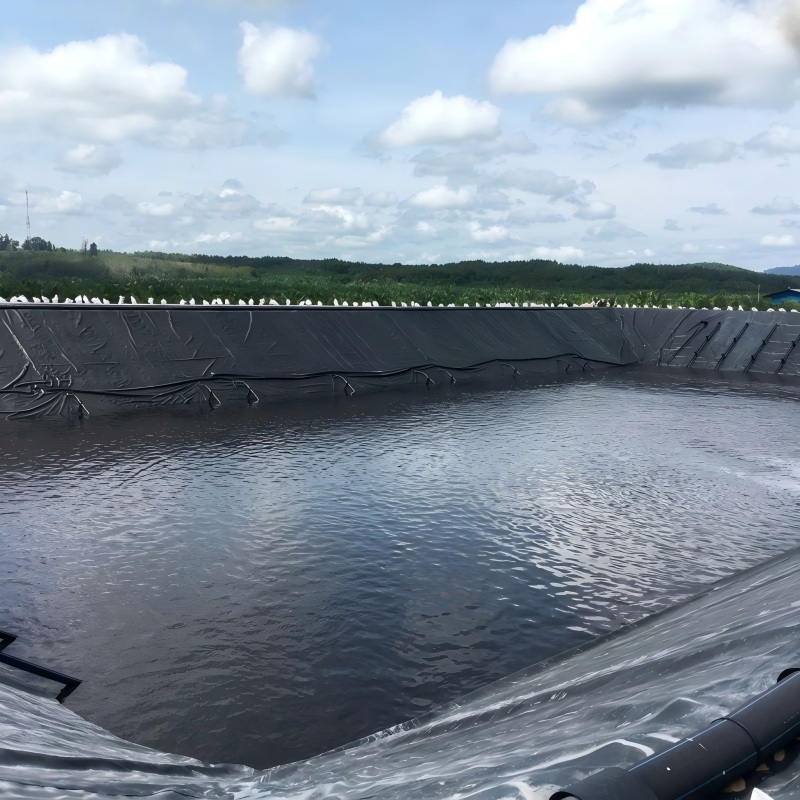
Pond projects use geomembranes to separate stored water or wastewater from the ground. The contained medium, cleaning method, exposed edges and operational equipment all belong in the material review. CHANGFENG groups related uses under its water conservancy and aquaculture solutions.
Civil Infrastructure and Remediation
Composite liners may be specified in road, railway, land-remediation and soil-protection systems. The geotextile layer can provide separation or protection while the film carries the barrier function.
How Do You Select a Geomembrane for a Project?
Start with the operating conditions, then connect them to a material, surface and construction. A supplier can respond more accurately when the request contains the same inputs used by the designer and installer.
| Project Input | What to Provide | Why It Matters |
| Contained medium | Water, wastewater, leachate, process liquid or gas | Guides material and compatibility review |
| Site geometry | Area, slope, depth, corners and penetrations | Influences surface type, panel layout and details |
| Foundation | Soil, concrete, existing liner and surface condition | Defines preparation and protection needs |
| Product request | Material, structure, thickness, width and length | Establishes the supply specification |
| Order scope | Quantity, destination port, packing and schedule | Supports roll planning and logistics review |
| Documentation | Test records, labels, samples and export documents | Aligns procurement and acceptance requirements |
Contained Medium and Exposure
Identify the liquid or gas, operating temperature and exposure conditions. Record whether the liner remains exposed or receives cover materials.
Slope, Subgrade and Seam Planning
Provide slope geometry, subgrade description and anticipated loads. Roll width and panel layout affect the number and position of field seams; wider rolls may reduce seam count when transport and handling conditions permit.
Product and Documentation Requirements
State the requested material, thickness, surface or composite structure, roll dimensions and quantity. For composite products, CHANGFENG also requests weight, film thickness, application, destination port, testing needs and packing requirements. Project orders can include agreed samples, specifications, test records, roll labels, batch numbers, packing photos, loading photos and export documents.
Geomembrane Installation and Quality Checks
Installation covers surface acceptance, panel planning, deployment, joining, details and inspection. Cover placement follows the specified sequence and equipment limits.
Procedures vary with polymer, joining equipment, weather and specification. Handover records should identify panels, seams, repairs and test results.
Choosing the Next Step for Your Geomembrane Project
A geomembrane project connects containment duty with material, surface, structure and installation controls. Smooth liners address compatible flat-surface containment conditions, textured liners add interface friction, and composite liners place geotextile protection around the barrier film.
Taian Changfeng Geosynthetic Materials Co., Ltd. supplies smooth HDPE, textured HDPE and composite geomembrane ranges for documented water, waste, mining, industrial and infrastructure applications. For product-range confirmation, submit your liner project requirements, including the contained medium, application, dimensions, slope, subgrade, requested structure, thickness, roll size, quantity, destination and required project documents.
Häufig gestellte Fragen
Q1: What is the main purpose of a geomembrane?
A: A geomembrane controls liquid or gas migration in an engineered system. It creates the barrier layer in containment works such as ponds, reservoirs, landfills and industrial facilities.
Q2: What is the difference between HDPE and LLDPE geomembrane?
A: HDPE and LLDPE are polyethylene liner materials with different mechanical behaviour. Selection should use product data for the same thickness, test methods, chemical exposure, temperature and site geometry.
Q3: When should you use a textured geomembrane?
A: A textured geomembrane is considered when interface friction affects the stability of a slope or layered liner system. The project designer should evaluate shear behaviour between the liner and adjacent soil or geosynthetic materials.
Q4: What is a composite geomembrane liner?
A: A composite geomembrane bonds a polymer film to one or two geotextile layers. The film provides the barrier, while the textile layers can provide protection, separation or mechanical support.
Q5: What information is needed to select a geomembrane?
A: Provide the application, contained medium, temperature, site geometry, slope, subgrade, material, surface, thickness, roll dimensions, quantity and destination. Add the required test records, labels, samples, packing and acceptance documents so the supplier can review the complete order scope.

Verbesserung der Leistung von Solarenergie.
Neueste Projekte, Lösungen und Energieversorgung
Strukturierte HDPE-Geomembran
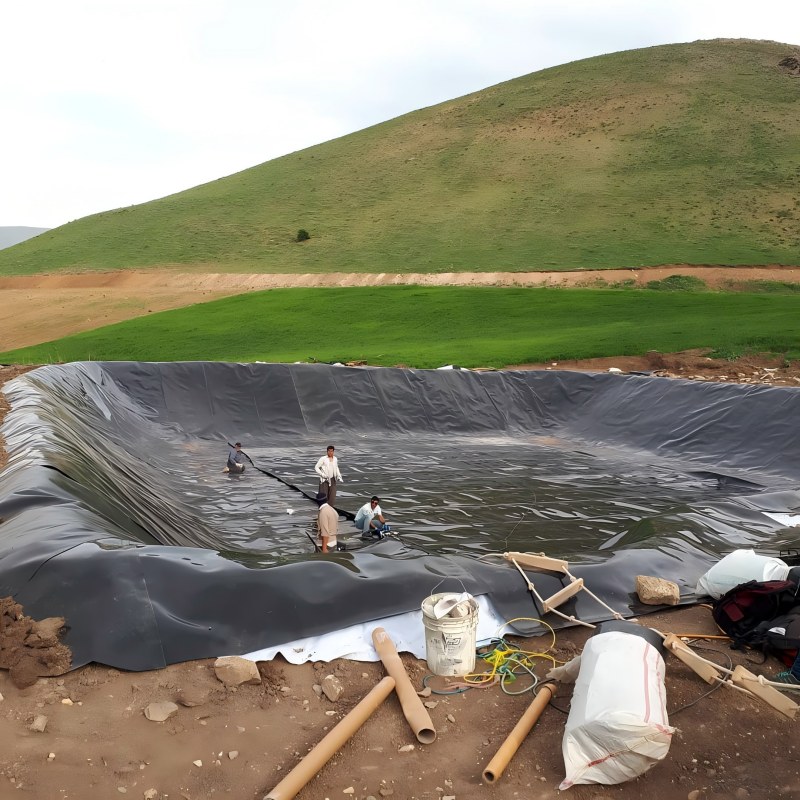
Glatte Geomembran-HDPE-Auskleidung
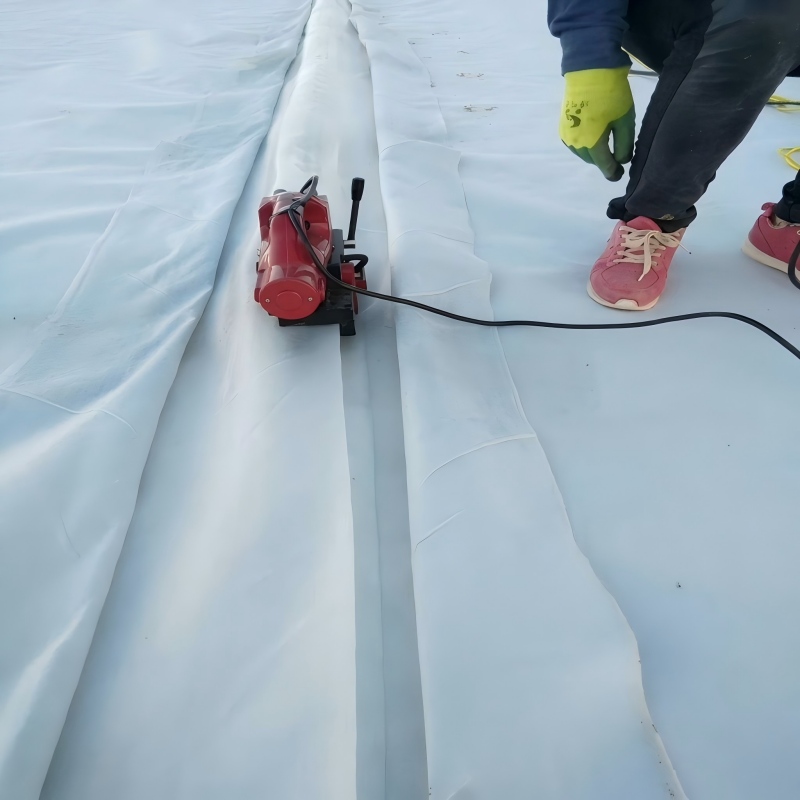
Verbund-Geomembran-Auskleidung
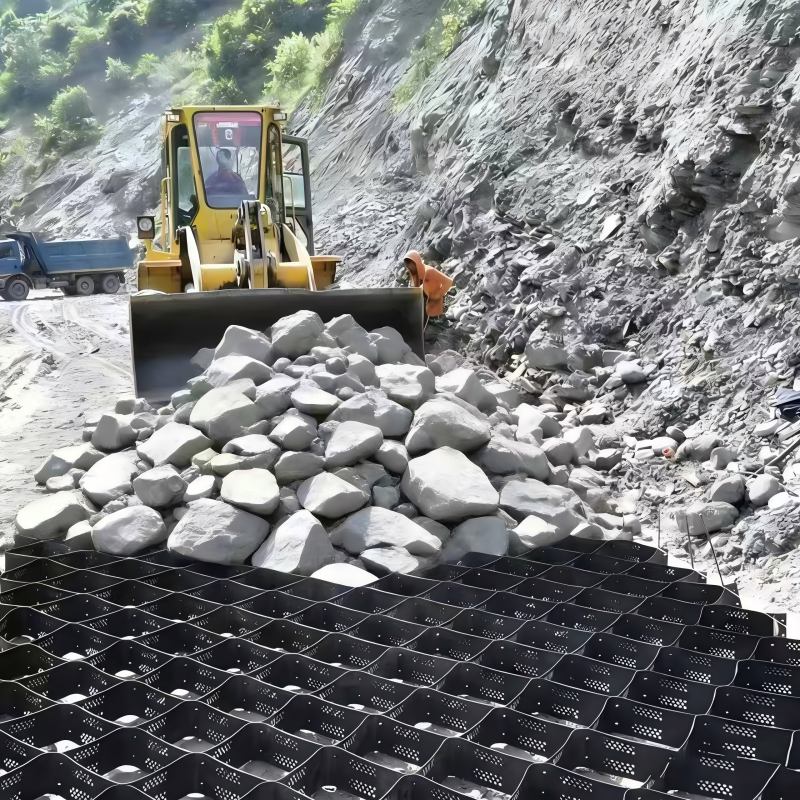
Kanalschutz
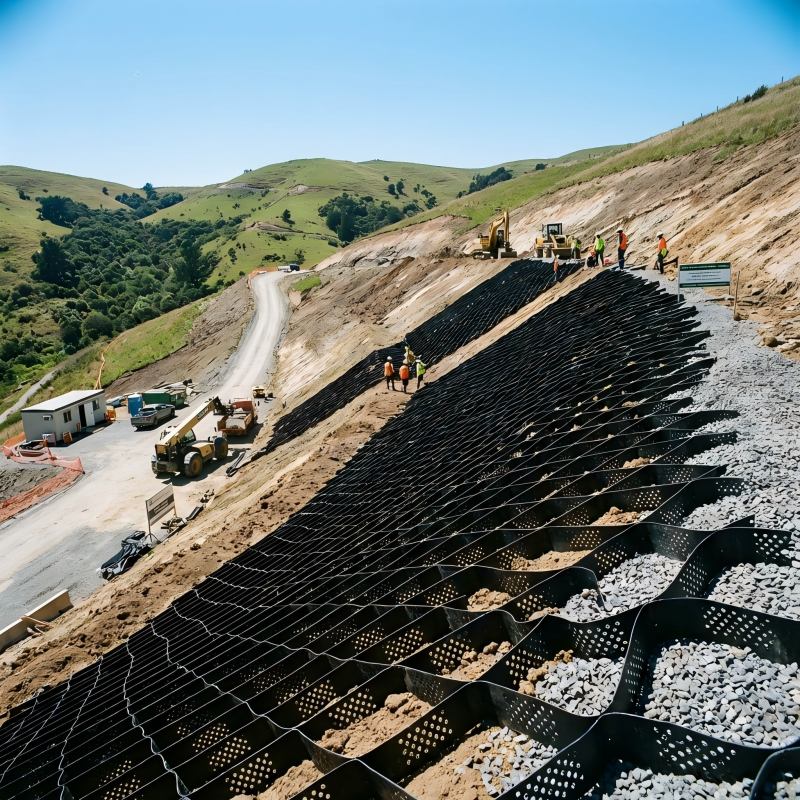
Erosionsschutz für Hänge
Stützmauern

Mehr als nur ein Hersteller
Ihr Lösungspartner
Wir schließen die Lücke zwischen effizienter Direktvertriebsabwicklung und fundiertem Ingenieurwissen. Ob strenge Vorschriften oder komplexe Baustellenbedingungen – unser Team liefert durch intensive technische Zusammenarbeit die „unsichtbare Stärke“, die Ihr Projekt benötigt.

Expertenzusammenarbeit

Fabrikbehörde

Innovative Lösungen
Angebot anfordern